You Won’t Believe What I Discovered in Debrecen
Debrecen, Hungary, isn’t just another stop on the map—it’s a cultural heartbeat waiting to be felt. I went expecting quiet streets and old buildings, but found something far deeper: living traditions, warm locals, and moments that stuck with me long after I left. From folk music that gave me chills to markets alive with color and scent, this city surprised me at every turn. It’s not about ticking landmarks off a list—it’s about connection, authenticity, and the kind of experiences you can’t fake. In Debrecen, culture isn’t preserved behind glass; it breathes in the streets, echoes in courtyards, and lingers in the steam of a shared meal. This is a place where history isn’t remembered—it’s lived.
Arrival in Debrecen: First Impressions That Lie
As the train pulled into Debrecen’s modest station, the first view of the city did little to stir excitement. Wide, tree-lined avenues stretched ahead, flanked by buildings that bore the quiet imprint of decades—some elegant with Austro-Hungarian flourishes, others bearing the functional simplicity of post-communist construction. There were no grand monuments in sight, no bustling plazas filled with tourists. At first glance, Debrecen appeared calm to the point of stillness, almost sleepy. But that initial calm, I would soon learn, was not emptiness—it was depth.
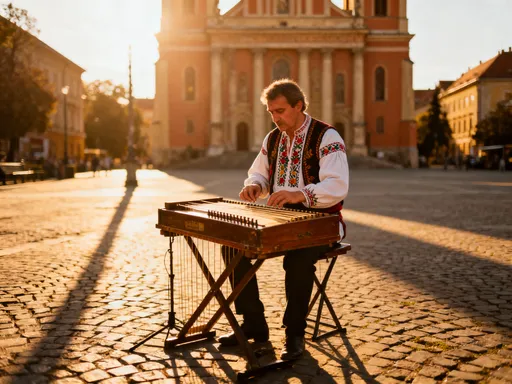
What I didn’t expect was how quickly the surface would crack open to reveal something richer. Just a few blocks from the station, near the Reformed College, a street musician began to play. The instrument was a cimbalom—a large hammered dulcimer central to Hungarian folk music—and the sound was unlike anything I’d heard before: resonant, rhythmic, with a haunting quality that seemed to vibrate through the cobblestones. Passersby slowed. A child stopped to listen, eyes wide. An elderly woman paused her shopping, closed her eyes, and smiled. In that moment, the city’s soul revealed itself not in monuments, but in music—raw, unperformed, and deeply felt. It was not entertainment; it was expression, a thread connecting generations.
This quiet authenticity defines Debrecen. Unlike cities that cater heavily to tourism, Debrecen does not perform. Its culture is not staged for cameras but carried in daily life. The architecture may reflect transitions—imperial, socialist, modern—but the spirit remains steady. There’s a dignity in how the city holds its history without fanfare. The real story isn’t in the facades, but in the moments between them: the hum of conversation in a neighborhood bakery, the embroidered apron of a woman selling herbs, the way a folk tune can stop a stranger in their tracks. These are the signs of a place where tradition isn’t preserved—it’s practiced.
The Great Church and the Spirit of the City
Standing at the heart of Debrecen, the Reformed Great Church is more than a landmark—it is a testament to resilience. Built in the early 19th century after a devastating fire destroyed much of the city, its neoclassical columns rise with quiet strength. With no spire—by decree of Emperor Franz Joseph, who feared Hungarian nationalism might grow too strong—the church stands broad and grounded, a symbol of endurance rather than triumph. Yet, within its walls, there is triumph of another kind: the triumph of identity, faith, and community.
Visiting the church, I was struck not by its size—though it is the largest Protestant church in Hungary—but by its presence. It does not dominate the skyline; it anchors the city emotionally. Locals refer to it simply as “the Great Church,” a term of both reverence and familiarity. Inside, the air is cool and still. Sunlight filters through tall windows, illuminating rows of wooden pews worn smooth by generations of hands. A large organ looms at the front, its pipes gleaming. But the true power of the space reveals itself in sound.
By chance, I attended a rehearsal of the local choir one late afternoon. The group, made up of men and women from the congregation, gathered without fanfare. As they began to sing in Hungarian, their voices rose in harmony, filling the vast interior with a warmth that defied the stone walls. The music was not showy—it was devotional, precise, and deeply moving. In that moment, I understood how culture and faith intertwine in Debrecen. The church is not just a place of worship; it is a living archive of song, language, and communal memory. It hosts lectures, concerts, and civic gatherings, serving as a hub where spiritual life and cultural identity converge.
For visitors, the Great Church offers more than history—it offers presence. Standing in its nave, listening to voices that have echoed here for nearly two centuries, one feels the continuity of a people who have weathered change without losing themselves. It is a reminder that the heart of a city is not always visible. Sometimes, it must be heard.
DAS Festival: Where Culture Explodes in Color
If the Great Church represents the quiet pulse of Debrecen, the Dísznapi Állami Sziget (DAS) Festival is its joyful roar. Held annually in August, this multi-day celebration transforms the city into a vibrant stage for Hungarian folk culture. One of the largest cultural festivals in the country, DAS draws performers, artisans, and visitors from across Hungary and beyond. But unlike commercialized events, it feels intimate, rooted, and deeply sincere. Here, tradition is not reenacted—it is celebrated with pride.
Walking through the festival grounds, the senses are overwhelmed in the best way. Colorful tents line the streets, displaying handwoven textiles, painted ceramics, and intricate wood carvings. Musicians play on open-air stages, their rhythms pulsing through the air. Children laugh as they try their hand at folk games, while elders sit nearby, nodding along to familiar tunes. The scent of grilled sausages and sweet pastries drifts through the breeze. Every detail tells a story—of regions, of families, of crafts passed down through generations.
What made the experience unforgettable was participation. At a folk workshop, I was invited to try on a traditional costume from the Hortobágy region—deep red skirts, embroidered bodices, and white lace headdresses. The garments, though beautiful, were heavy with meaning. Each stitch, each color, carried symbolism: red for vitality, blue for protection, floral patterns for fertility and growth. A local instructor guided me through the steps of a traditional circle dance, her hands steady, her voice patient. “It’s not about perfection,” she said with a smile. “It’s about being together.”
That spirit of inclusion defines DAS. Visitors aren’t spectators—they’re welcomed into the circle. Whether joining a dance, tasting homemade pálinka, or watching a master potter shape clay on a spinning wheel, one feels part of something enduring. The festival doesn’t exist to attract tourists; it exists to sustain culture. And in doing so, it offers a rare gift: the chance to experience tradition not as a museum exhibit, but as a living, breathing celebration.
Local Flavors: More Than Just Paprika
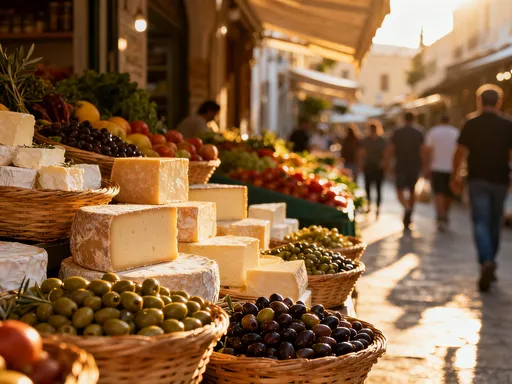
No understanding of Debrecen is complete without stepping into its Market Hall—a cathedral of scent, sound, and flavor. Open daily, this bustling indoor market is where locals shop, chat, and pass down culinary knowledge. The moment you enter, you’re enveloped in aroma: smoked meats, ripe peppers, fresh bread, and the tang of fermented dairy. Stalls overflow with seasonal produce, jars of homemade preserves, and strings of dried herbs. But the true stars are the butchers, proudly displaying Debrecen’s most famous export: kolbász, a paprika-seasoned sausage that has earned protected geographical status in the European Union.
Tasting authentic Debrecen kolbász is a revelation. Unlike mass-produced versions, the real thing is coarsely ground, richly spiced, and deeply savory. I watched as a vendor sliced a piece for sampling, the red paprika dusting the knife. The first bite was smoky, slightly spicy, with a lingering warmth. “This is how my grandmother made it,” he said, wrapping a small portion for me to take home. Nearby, a woman stirred a pot of halászlé, the famous fisherman’s soup from the nearby Tisza River. Made with river fish, onions, and generous amounts of paprika, it simmers for hours, its color turning a deep, fiery orange. “It’s not just food,” she told me. “It’s memory.”
One of the most touching experiences was sharing a home-cooked meal with a local family. Invited through a cultural exchange program, I entered a modest apartment where generations gathered around a long table. The meal included túrós csusza—a comforting dish of cottage cheese, noodles, and crispy bacon—and homemade pickles, fresh bread, and a sweet cottage cheese pancake for dessert. As we ate, stories flowed: childhood memories of harvest festivals, the importance of Sunday dinners, the way certain dishes are tied to holidays and family milestones. In that warm kitchen, I realized that food in Debrecen is more than sustenance—it is language, love, and legacy.
For travelers, these culinary experiences offer a direct line to the soul of the city. You don’t need a five-star restaurant to taste authenticity. You need only to listen, to ask, to accept an invitation. In Debrecen, the table is never closed.
Hidden Courtyards and Living Heritage
Beyond the main streets and tourist sites, Debrecen reveals its most precious treasures in quiet corners. Wandering through the Kossuth Quarter, I discovered a series of hidden courtyards—once part of historic merchant homes, now preserved as cultural spaces. These enclosed gardens, with their flowering vines and peeling frescoes, feel like secrets. In one, a group of women gathered to embroider, their needles moving swiftly. In another, a woodcarver shaped a decorative beam for a traditional house, his hands moving with the confidence of decades.
These artisans are the quiet guardians of Debrecen’s heritage. Many work in small workshops, often family-run, where skills are taught not in schools but at the kitchen table. I visited a potter who uses clay from the nearby hills, shaping vessels on a foot-powered wheel just as his ancestors did. “No two pieces are the same,” he said, turning a bowl in his hands. “Like people, each has its own character.” His daughter, a young woman in her twenties, works alongside him, learning the craft not out of obligation, but pride. “It’s not just about making things,” she explained. “It’s about keeping our story alive.”
Perhaps the most moving encounters were with elders who remember life before the political changes of 1989. Over cups of strong tea, they spoke of hardship, but also of resilience—of how families preserved traditions even when resources were scarce. One woman showed me a hand-stitched tablecloth, made during the 1960s. “We didn’t have much,” she said, “but we made beauty where we could.” These conversations were not interviews; they were gifts. In their stories, I heard the quiet strength of a people who value continuity, community, and craft.
These hidden spaces matter. They remind us that culture is not only found in festivals or museums, but in daily acts of creation and memory. In a world that often values speed over substance, Debrecen’s courtyards stand as quiet resistance—a testament to the enduring power of the handmade, the homegrown, and the heartfelt.
Thermal Baths and Cultural Rhythm
In Hungary, bathing is not a luxury—it is a ritual. And in Debrecen, this tradition thrives at the Aquaticum Spa, a modern thermal complex built over natural hot springs. Unlike crowded tourist spas, Aquaticum feels integrated into daily life. Locals come after work, on weekends, with parents and children, elders and teenagers, all sharing the warm, mineral-rich waters. The atmosphere is relaxed, unhurried, communal.
The experience begins with the heat—water heated to around 36–38°C, rich in calcium and magnesium, known for soothing joints and calming the nervous system. But more than physical relief, the baths offer social connection. People talk, read, float in silence. In one outdoor pool, a group of older men played chess on a waterproof board, laughing between moves. Nearby, a young mother held her baby in the shallows, both smiling as the warm water cradled them. There is no rush, no pressure to perform. Time moves differently here.
The roots of this tradition run deep. The Romans first recognized the healing properties of Hungary’s thermal waters, and the practice has evolved but never disappeared. In Debrecen, the baths are not just about wellness—they are about rhythm. They reflect a cultural value: that rest is not idleness, but renewal. That community is built not only in churches or markets, but in shared silence and warmth.
For visitors, a visit to Aquaticum is not just a spa day—it’s a lesson in balance. It invites you to slow down, to soak not just your body, but your mind. In a world that glorifies busyness, Debrecen’s thermal culture offers a quiet counterpoint: that true well-being includes stillness, connection, and the simple act of being present.
Why Debrecen Stays With You
Months after my visit, Debrecen remains with me—not as a collection of sights, but as a feeling. It’s the echo of cimbalom music on a quiet street, the warmth of a shared meal, the weight of a hand-stitched apron. These moments didn’t just impress me; they moved me. Because Debrecen does not offer spectacle—it offers substance. It asks not to be admired from a distance, but to be experienced up close.
What makes the city unforgettable is its authenticity. Culture here is not curated for outsiders. It is lived—by the musician playing for coins, the grandmother teaching her granddaughter to embroider, the family gathering around a pot of halászlé. There is no pretense, no performance. What you see is what has been sustained, cherished, and passed down.
Debrecen also teaches the value of slow travel. In an age of checklists and photo ops, it invites you to linger. To sit in a courtyard. To ask a question. To accept an invitation. It rewards curiosity with connection, and patience with meaning. You don’t discover Debrecen in a day—you feel it over time.
And perhaps most importantly, Debrecen reminds us that Hungary’s soul extends far beyond Budapest. While the capital dazzles, cities like Debrecen hold the deeper layers—the traditions, the rhythms, the quiet pride of everyday life. They are not lesser; they are different. Richer, in their own way. For travelers willing to look beyond the obvious, Debrecen is not just a destination. It is a revelation.
Debrecen doesn’t shout for attention—but it whispers something unforgettable. It’s a city where culture isn’t performed for tourists, but lived with pride. In a world of cookie-cutter travel, Debrecen stands quiet, real, and deeply human. Go not to see sights, but to feel a way of life that time hasn’t erased.