Wandering Through Light and Color: Provence’s Soul Unfolded
You know that feeling when a place just gets you? Provence didn’t just welcome me—it whispered to my soul. Wandering through sun-drenched villages and blooming lavender fields, I stumbled upon art in every corner: a painter’s brushstroke, a centuries-old chapel’s quiet grace, the rhythm of Provençal life. This isn’t just sightseeing—it’s living culture. What I found wasn’t on any map, but in the moments between paths. Let me take you there.
The Allure of Aimless Wandering in Provence
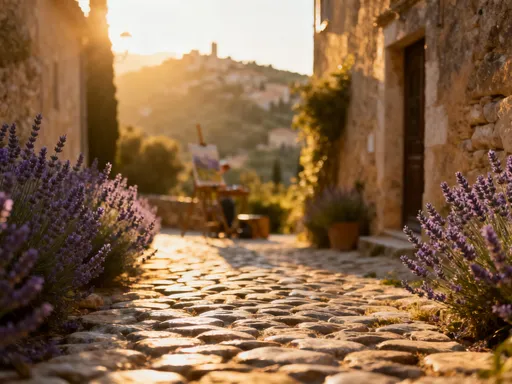
There is a particular kind of magic that unfolds only when you let go of the itinerary. In Provence, the most meaningful experiences are rarely planned. They happen when you pause beneath a stone archway as the midday sun softens into gold, or when you follow the scent of rosemary down an unmarked lane and find a village square where old men play pétanque with quiet concentration. The rhythm of life here resists haste. It invites you to wander without destination, to allow curiosity—not GPS—to guide your steps.
Walking through villages like Lourmarin or Ménerbes, one quickly learns that the soul of Provence lives in the in-between spaces. Not in grand monuments, but in the creak of a wooden shutter opening onto a flower-filled courtyard, the chime of a church bell echoing over terracotta rooftops, or the sudden glimpse of a vine-covered chapel nestled in the hills. These are the moments that linger, not because they were scheduled, but because they were discovered. The absence of a fixed path allows space for serendipity—for conversations with locals who offer directions with a smile and a side of village gossip, for stumbling upon a small gallery tucked behind a bakery, or for sitting on a sun-warmed bench and watching the world unfold in slow motion.
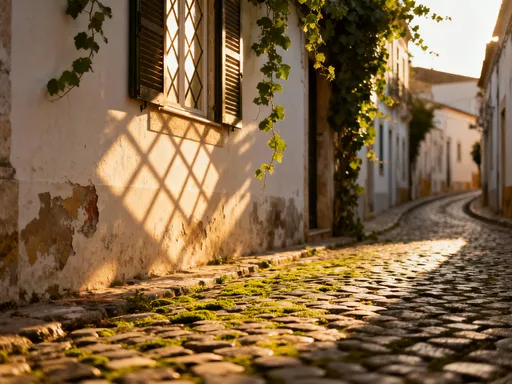
The sensory richness of such wandering is unmatched. The air carries the dry, herbal perfume of wild thyme and lavender, mingling with the faint tang of olive oil from a nearby mill. Cicadas hum in the heat, their song rising and falling like a natural metronome. Light plays differently here—bright yet diffused, casting long shadows that stretch across cobblestones like fingers. At dusk, the hills glow in shades of amber and rose, as if the land itself is breathing. This is not merely scenery; it is an atmosphere, a mood, a living presence.
Contrast this with the experience of structured tourism—rushed tours, timed entries, overcrowded viewpoints—and the difference becomes clear. When every minute is accounted for, there is little room for stillness, for noticing, for feeling. In Provence, the act of wandering becomes a form of listening. It is a way of tuning into the quiet pulse of a place that has existed long before visitors arrived and will continue long after they’ve left. To walk without purpose is not to waste time; it is to honor it.
A Living Canvas: Where Nature Meets Art
Provence has long been a muse for artists, not by accident, but by essence. The region’s unique interplay of light, color, and landscape creates a natural canvas unlike any other. In the 19th and early 20th centuries, painters flocked here seeking truth in color and form. Vincent van Gogh, during his time in Arles, captured the intensity of Provençal light in works like Starry Night Over the Rhône and The Yellow House. He wrote of the brilliance that made everything appear “more vivid than in Paris,” and indeed, the clarity of the sky, the vibrancy of the fields, and the stark contrast between shadow and sun seem to demand expression.
Yet art in Provence is not confined to museum walls. It spills into the streets, the fields, the very air. In Aix-en-Provence, students from the École des Beaux-Arts still set up easels in the Cours Mirabeau, sketching the plane trees and fountains that Cézanne once painted. In Saint-Rémy-de-Provence, the rolling hills that inspired his Mont Sainte-Victoire series remain unchanged—still bathed in the same silvery light, still dotted with cypress trees that rise like flames against the sky. These landscapes are not relics; they are living subjects, continually reinterpreted by new generations of artists.
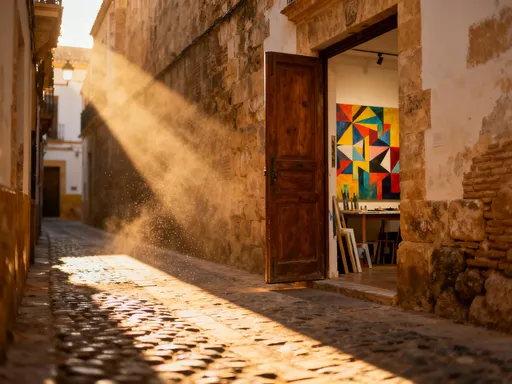
Throughout the region, open-air exhibitions and local galleries reflect this ongoing dialogue between nature and creativity. In summer, villages host outdoor installations where sculptures stand among lavender rows or olive groves, blending human imagination with the organic forms of the land. Even the architecture contributes to the aesthetic—ochre walls glow at sunset, shuttered windows frame views like living paintings, and village plazas become stages for impromptu performances. Art here is not something to be consumed passively; it is part of the environment, woven into daily life.
The seasonal shifts only deepen this artistic resonance. In spring, almond blossoms burst into delicate pink clouds across the hills. By June, lavender fields stretch in endless waves of purple, their color so intense it seems to vibrate under the sun. Autumn brings a softer palette—golden vineyards, russet leaves, and misty mornings that soften edges and blur horizons. Each season offers a different mood, a different invitation to see. For the artist, the photographer, or simply the attentive traveler, Provence is never the same twice.
Time-Tested Villages: Culture Woven into Stone
The hilltop villages of Provence are not tourist attractions; they are living continuations of history. Perched above valleys and vineyards, places like Gordes, Roussillon, and Saint-Rémy-de-Provence rise from the earth as if grown from the rock itself. Their buildings, crafted from local stone and ochre pigments, blend seamlessly into the landscape. Narrow, winding streets follow the contours of the hills, too tight for cars, too ancient for hurry. Here, time moves differently—not backward, but in a steady, unhurried present that carries the weight of centuries.
In Gordes, the Abbey of Sénanque stands just outside the village, its Romanesque walls surrounded by lavender fields that bloom each summer. The monks who live there maintain a life of silence and labor, their presence a quiet testament to continuity. The village itself clings to the hillside, its stone houses stacked like layers of sediment. Walking its alleys, one passes doorways carved with weathered symbols, fountains fed by natural springs, and courtyards where jasmine climbs ancient walls. There are no staged reenactments, no costumed performers—only the everyday life of people who have lived here for generations.
Roussillon, known for its striking red cliffs formed by iron oxide, is equally rooted in its past. The village’s name is linked to the pigment “ochre,” which was once mined here and used in paints across Europe. Today, a nature trail winds through the Ochre Conservatory, where pathways cut through canyons of rust, coral, and gold. Yet even as visitors come to marvel at the colors, life in the village continues: children walk to school, bakers open their shops at dawn, and neighbors greet each other by name. The past is not performed; it is lived.
Saint-Rémy-de-Provence, nestled in the Alpilles range, offers another blend of history and vitality. Its Roman ruins, including the ancient Glanum site, stand just beyond the modern town, their columns and arches slowly being reclaimed by vines and time. Yet the town center buzzes with energy—cafés spill onto the streets, weekly markets fill the plaza with color and sound, and artists display their work in small galleries. What makes these villages so powerful is not their beauty alone, but their authenticity. They do not exist for visitors. They simply are. And in their stillness, their dignity, their quiet endurance, they offer a rare kind of truth.
The Rhythm of Provençal Life: Markets, Music, and Moments
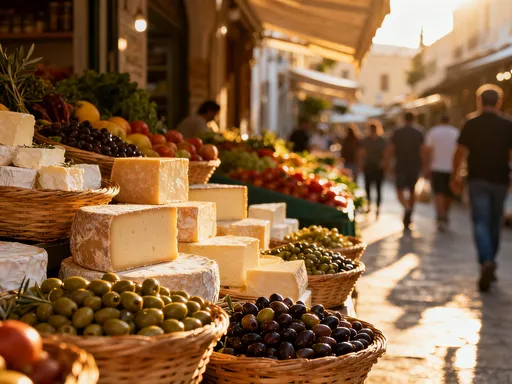
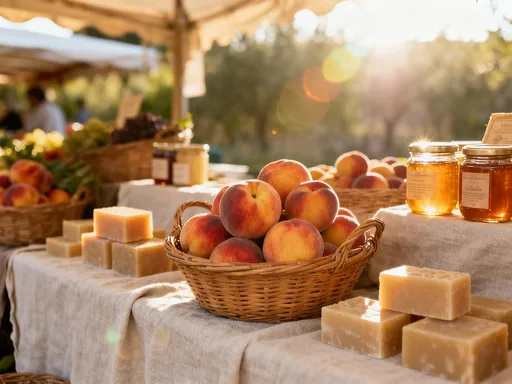
To understand Provence, one must spend time in its markets. These are not tourist bazaars, but vital centers of community life. Each village hosts its own market day, often in the same square where markets have been held for centuries. In L’Isle-sur-la-Sorgue, known for its antique markets, rows of stalls spill over cobblestone streets, offering everything from vintage linens to hand-carved furniture. In Apt or Forcalquier, the focus is on food—plump olives in brine, wheels of goat cheese wrapped in ash, bundles of thyme and rosemary tied with twine, and sun-ripened tomatoes still warm from the field.
What makes these markets special is not just the quality of goods, but the rhythm of interaction. Vendors know their regulars. They exchange news as they weigh out figs or slice cured ham. A woman might linger to ask about a farmer’s daughter’s wedding; a man might debate the best way to cook artichokes before buying a bunch. These exchanges are not transactions; they are threads in a social fabric. For the visitor, simply observing—sipping a café au lait at a nearby table, listening to the hum of Provençal French—can be as enriching as any guided tour.
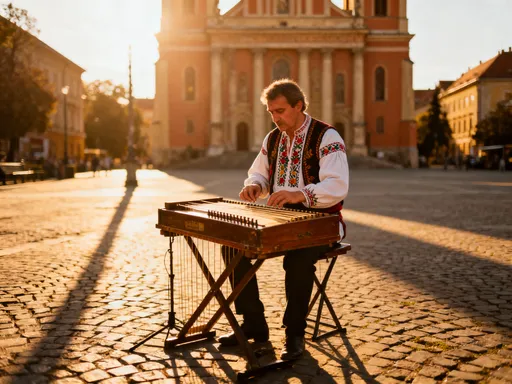
Music, too, plays a quiet but essential role. On summer evenings, some villages host traditional gatherings where locals form circles for the farandole, a Provençal folk dance with roots in medieval times. The dance is simple—linked hands, skipping steps, a flowing line that winds through the square—but it carries a sense of shared identity. Children join in, elders smile from the sidelines, and the melody of flutes and tambourines rises into the warm night. These moments are not staged for tourists; they are expressions of belonging.
The true rhythm of Provençal life is found in its repetitions—bakers pulling bread from wood-fired ovens at 6 a.m., farmers checking their vines at dusk, families gathering for long Sunday lunches. It is a life shaped by seasons, by light, by the land. To witness it is not to observe a performance, but to be reminded of a different way of being—one that values slowness, connection, and presence. The most meaningful travel experiences here come not from ticking off sights, but from allowing oneself to be carried by the day, to sit, to watch, to listen, and to simply be.
Artisan Encounters: Craft as Legacy
In Provence, craftsmanship is not a souvenir industry; it is a lineage. Across the region, artisans continue traditions passed down through generations, their work rooted in the land and its resources. In Biot, a village near Antibes, pottery has been made since the 13th century. Today, local workshops produce glazed ceramics in earthy tones—terracotta, sage green, cobalt blue—each piece shaped by hand, each glaze formulated from natural minerals. Visitors can watch potters at their wheels, feel the cool clay, and see how a lump of earth becomes a bowl, a vase, a work of quiet beauty.
Grasse, nestled in the hills above Cannes, is known as the world capital of perfume. Since the 16th century, its climate and soil have supported the cultivation of jasmine, rose, and tuberose—flowers essential to fine fragrance. While some large perfume houses operate here, many smaller ateliers still practice traditional methods: harvesting flowers by hand at dawn, extracting essence through slow distillation, blending scents with precision and intuition. Tours of these workshops reveal not just technique, but philosophy—a deep respect for nature, for time, for the invisible art of scent.
In the northern reaches of Provence, around Nyons, olive oil production remains a cornerstone of rural life. The region’s black olives, cured in brine, are renowned for their rich, buttery flavor. Small-scale producers press oil in stone mills, often using olives harvested from ancient trees that have stood for centuries. The process is labor-intensive, the yield modest, but the result is exceptional—oil with a deep green hue, a peppery finish, and the unmistakable taste of sun and soil. Tasting sessions in village cellars offer more than flavor; they offer a connection to the land and the people who tend it.
What unites these artisans is a quiet pride in their work. They do not seek fame or mass appeal. Their craft is not performance; it is vocation. For the traveler, engaging with these traditions—whether through a workshop visit, a tasting, or a simple conversation—offers a depth of understanding that no museum can provide. It is a reminder that culture is not only in monuments, but in hands, in recipes, in the daily act of making.
Seasons of Culture: Timing Your Journey with Purpose
To travel to Provence is to engage with its seasons. Each time of year brings a different face, a different rhythm, a different invitation. Summer, from June to August, draws the largest crowds, and for good reason—the lavender is in full bloom, the days are long, and festivals fill the nights with music and theater. The Festival d’Avignon, one of Europe’s most renowned performing arts events, transforms the city’s ancient courtyards and theaters into stages for bold, experimental works. Smaller villages host their own celebrations—feasts, processions, open-air concerts—that pulse with local energy.
But summer is not the only season of beauty. Spring, from March to May, offers mild temperatures and blooming landscapes. Almond trees flower in pink and white, vineyards begin to green, and the hills are dotted with wildflowers. It is an ideal time for hiking, for exploring villages without the midday heat, and for enjoying outdoor markets at a leisurely pace. Autumn, from September to November, brings a golden hush. The harvest is in—grapes for wine, olives for oil—and the air carries the scent of fermentation and woodsmoke. The light softens, the crowds thin, and the pace of life slows to a reflective cadence.
Winter, often overlooked, holds its own quiet magic. Truffle markets in Richerenches and Carpentras draw gourmands from across France. The black truffle, harvested with the help of trained dogs, is celebrated in local kitchens and at seasonal fairs. Christmas markets in Aix and Arles feature handmade ornaments, Provençal santons (clay nativity figures), and mulled wine served in ceramic cups. The days are shorter, the skies grayer, but there is warmth in the hearths, in the gatherings, in the sense of community drawing inward.
Choosing when to visit depends not on avoiding crowds alone, but on aligning with what you wish to experience. Lavender lovers will time their trip for June or early July. Food enthusiasts may prefer autumn for the harvest or winter for truffles. Those seeking cultural events will plan around summer festivals. But no matter the season, the key is intention. Traveling with awareness of the calendar allows for a richer, more meaningful journey—one that resonates with the natural and cultural rhythms of the region.
Wandering with Respect: Ethical and Meaningful Travel
The beauty of Provence is fragile. Its villages, its landscapes, its way of life are not endless resources to be consumed. As more travelers discover its charm, the need for responsible exploration grows ever more urgent. This does not mean staying away, but rather coming with care—with a mindset of respect, of humility, of presence. The most meaningful journeys are not those that leave the deepest footprint, but those that leave the lightest.
Supporting local businesses is one of the most direct ways to travel ethically. Choosing family-run inns over chain hotels, eating at village cafés instead of tourist traps, buying directly from artisans and farmers—these choices sustain the communities that make Provence unique. Avoiding overcrowded sites during peak hours allows space for both locals and thoughtful visitors to enjoy shared spaces. Parking at the edge of a village and walking in reduces noise and congestion, while also offering a more immersive arrival.
Equally important is the attitude with which one engages. Culture is not a costume to try on, nor a photo opportunity to exploit. It is a lived reality, deserving of dignity. Listening before speaking, observing before participating, asking permission when photographing people—these small acts of respect build bridges rather than barriers. Learning a few phrases in French or Provençal, even just “bonjour” and “merci,” signals a willingness to connect on local terms.
Ultimately, the goal is not to take, but to receive. To let Provence reveal itself in its own time, in its own way. To walk its paths not as a conqueror of checklists, but as a guest, open to wonder. The memories made here—the scent of lavender at dusk, the sound of a distant accordion, the taste of bread still warm from the oven—will stay long after the journey ends. And if we are careful, if we are kind, if we wander with quiet hearts, then the soul of Provence will continue to whisper, not just to us, but to those who come after.