You Gotta See How Dalat’s Urban Vibe Redefines Mountain Escape
Nestled in Vietnam’s highlands, Dalat blends cool breezes with a quirky urban charm that feels worlds away from the usual beach-and-bustle scene. I didn’t expect a city built on misty hills to pull me in with its art alleys, café culture, and tree-lined boulevards—but it did. This isn’t just nature with a few buildings tacked on; it’s a thoughtfully layered urban space where every corner tells a story. With its year-round spring climate, French colonial legacy, and lush green surroundings, Dalat offers a rare balance: a city that feels alive without ever feeling overwhelming. It’s a place where urban life slows down, invites reflection, and celebrates beauty in the everyday.
First Impressions: A City Wrapped in Mist and Memory
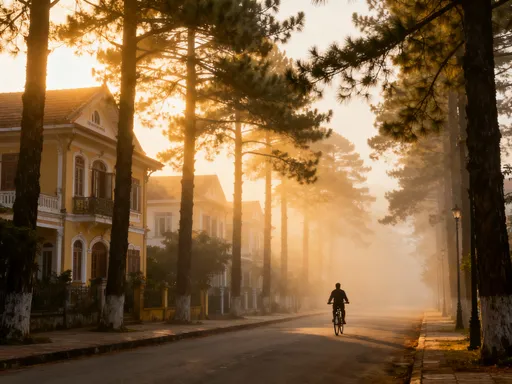
Arriving in Dalat is like stepping into a softly focused photograph—colors are rich but muted, sounds are distant, and the air carries a crispness that wakes the senses. Perched at about 1,500 meters above sea level in the Lam Dong province, the city enjoys a mild, spring-like climate year-round, with average temperatures ranging between 15°C and 20°C. This natural air conditioning alone makes it a sanctuary from Vietnam’s tropical heat, but it’s the atmosphere that truly sets Dalat apart. As the morning mist curls around pine forests and red-tiled rooftops, the city reveals itself in fragments: a glimpse of a weathered villa, a bicycle laden with flowers, the quiet chime of a distant church bell.
Unlike the relentless pace of Ho Chi Minh City or Hanoi, Dalat moves to a different rhythm. There’s no rush, no urgency—just a steady hum of daily life unfolding at human speed. The urban layout contributes to this feeling. Rather than a dense, vertical sprawl, Dalat spreads out across rolling hills, with neighborhoods connected by winding roads and shaded paths. This low-density design allows space for trees, gardens, and quiet corners, making it easy to feel both in a city and in nature at the same time. The result is a rare kind of urban comfort—one that supports contemplation, connection, and rest.
This sense of calm is not accidental. Dalat was originally developed by the French in the early 20th century as a hill station for colonial administrators and military personnel seeking relief from the lowland heat. The city’s planning reflected European ideals of order, hygiene, and scenic beauty, with wide boulevards, public parks, and villas designed to harmonize with the landscape. While Vietnam has changed dramatically since those days, Dalat has retained much of its original character. The past isn’t hidden here; it’s part of the present. Old churches stand beside modern cafés, and century-old pine trees shade new bike lanes. This continuity gives the city a layered identity—neither stuck in the past nor rushing toward the future, but living comfortably in between.
The Heartbeat of the City: Xo Viet Nghe Tinh Street and the Urban Pulse
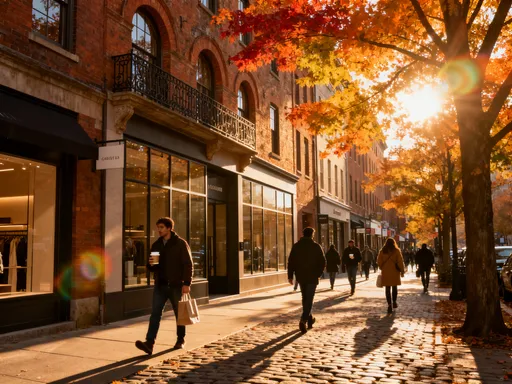
If Dalat has a main stage, it’s Xo Viet Nghe Tinh Street—a broad, tree-lined avenue that runs through the city center like a spine. More than just a transportation route, this street functions as a living timeline of Dalat’s evolution. On one block, you’ll find a French-era post office with arched windows and wrought-iron details; on the next, a street art mural depicting blooming lotuses and soaring birds. Small boutiques sell handmade lavender soap, bamboo crafts, and locally roasted coffee, often housed in buildings that have stood for decades. This blend of old and new isn’t forced—it feels organic, the way a city should grow when it respects its roots while embracing change.
What makes Xo Viet Nghe Tinh special is how it prioritizes people over vehicles. Sections of the street are closed to traffic on weekends, transforming into pedestrian promenades where families stroll, children play, and street performers share music. Open-air art galleries display works by local painters, and food vendors offer grilled sweet potatoes, fresh fruit ices, and cups of hot ginger tea. These temporary closures don’t disrupt life—they enhance it, creating space for community and creativity. The city doesn’t need massive plazas or grand monuments to foster connection; it achieves this through thoughtful, human-scale interventions.
Urban planners have long studied how public spaces shape social behavior, and Dalat offers a compelling case study. By limiting vehicle access and encouraging foot traffic, the city creates safer, quieter, and more inviting streets. People linger longer, talk more, and notice more. A bench under a jacaranda tree becomes a meeting spot. A small fountain becomes a photo backdrop. A corner mural becomes a conversation starter. These micro-interactions add up, forming the quiet pulse of urban life. In a world where many cities feel alienating or overstimulating, Dalat shows how design can nurture belonging.
Café Culture as Urban Connector
In Dalat, coffee is more than a morning ritual—it’s a way of life, a social anchor, and a design philosophy. The city is home to hundreds of cafés, each with its own personality, from minimalist spaces with Scandinavian furniture to jungle-like hideaways with wooden walkways winding through ferns and moss. Many are built into the hillsides, offering panoramic views of valleys and lakes. Others are tucked into quiet alleys, accessible only by a short flight of steps. What they all share is an invitation to stay—not to grab and go, but to sit, sip, and soak in the moment.
These cafés serve multiple roles. For locals, they’re extensions of the living room—places to meet friends, read, or work remotely. For visitors, they’re windows into the city’s soul. A single café might have a small library, rotating art exhibits, or a quiet garden for meditation. Some specialize in slow brew methods, educating guests about bean origins and roast profiles. Others focus on atmosphere, using natural materials, soft lighting, and ambient music to create a sanctuary from the outside world. The common thread is intentionality: these spaces are designed to slow time, not speed it up.
One of the most popular types is the overlook café—perched on a ridge or cliff edge, offering sweeping views of the valley below. On any given afternoon, you’ll see people sitting quietly with their drinks, watching the mist roll in or the sun dip behind the hills. These moments of stillness are not incidental; they’re built into the city’s culture. Unlike fast-paced urban centers where coffee is fuel for productivity, Dalat treats it as a companion for reflection. The café, in this context, becomes more than a business—it’s a social infrastructure, a place where relationships form and ideas unfold at their own pace.
For remote workers and digital nomads, this café culture is especially appealing. With reliable Wi-Fi, comfortable seating, and a peaceful environment, many of these spaces double as informal co-working hubs. Yet even in these functional roles, the emphasis remains on comfort and connection, not efficiency. There’s no pressure to order every hour or vacate a seat. Instead, there’s a quiet understanding: you’re welcome to stay as long as you need, as long as you respect the space. This ethos reflects a broader value in Dalat—hospitality not as a transaction, but as a way of being.
Green Spaces Woven into the Urban Fabric
In many cities, parks are afterthoughts—patches of green squeezed between buildings or reserved for special occasions. In Dalat, greenery is fundamental. It’s not added to the city; it’s part of the city’s DNA. From the expansive Flower Gardens to small neighborhood plots where elders practice tai chi, nature is seamlessly integrated into daily life. The city’s elevation and temperate climate support a rich variety of flora, including hydrangeas, chrysanthemums, orchids, and pine trees, all of which contribute to its visual identity and air quality.
Yersin Park, named after the French scientist who helped develop the region’s agriculture, is a prime example of how green spaces serve both beauty and function. The park features walking trails, a small lake, and shaded benches, making it a favorite spot for families and joggers. But it’s also a center for environmental education, with signs explaining local plant species and conservation efforts. Nearby, the Dalat Flower Gardens stretch across a hillside in a vibrant display of color and scent, drawing visitors year-round. Yet even outside these major attractions, green spaces appear unexpectedly—a pocket garden at a street corner, a row of flowering trees along a residential lane, a vine-covered wall beside a café.
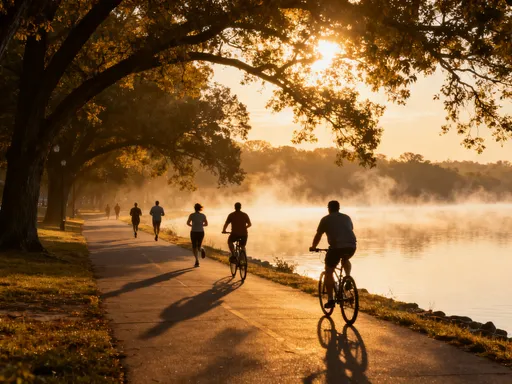
These elements do more than please the eye. They improve mental well-being, reduce urban heat, and support biodiversity. Studies have shown that access to green spaces lowers stress, enhances mood, and encourages physical activity—all of which contribute to a higher quality of life. In Dalat, this isn’t theoretical; it’s lived experience. Residents take morning walks through pine forests, children play in flower-filled courtyards, and couples picnic on grassy slopes overlooking the lake. The city’s design ensures that nature is never far away, making it easy to step outside and breathe deeply.
Walking paths connect many of these green zones, forming a network that allows people to move through the city without relying solely on roads. This pedestrian-friendly infrastructure supports sustainable tourism and reduces traffic congestion. It also fosters exploration—when you’re on foot, you notice details you’d miss in a car: a hidden mural, a fragrant herb garden, the sound of birds in the trees. In this way, Dalat’s green spaces don’t just provide relief from urban life; they redefine what urban life can be.
Art and Architecture: Where Creativity Meets Urban Life
Art in Dalat isn’t confined to galleries—it’s in the streets, on the walls, and in the structures themselves. The city has become a canvas for local and visiting artists, who use murals, sculptures, and installations to express identity, history, and imagination. One of the most striking examples is the abandoned Dalat–Thap Cham railway station, once a symbol of colonial ambition, now repurposed as a photo spot and cultural landmark. The rusting tracks, overgrown with vines, tell a story of change and resilience, while the restored station building hosts small exhibitions and craft stalls.
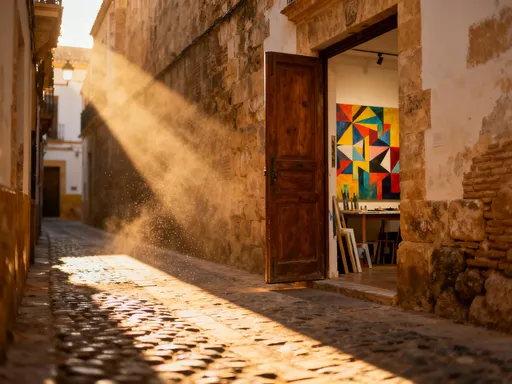
Alleyways throughout the city are adorned with murals—some whimsical, others deeply symbolic. A wall might depict a child flying a kite made of lotus petals, or a tiger emerging from a forest of bamboo. These works aren’t commissioned by the government; many are grassroots projects led by local artists and students. They reflect a sense of ownership and pride, turning neglected spaces into points of connection. In a world where urban art is often seen as vandalism, Dalat treats it as dialogue—a way for communities to speak, remember, and dream.
Architecture in the city follows a similar ethos of creative reuse and imaginative design. The famous Crazy House, though controversial for its commercial nature, exemplifies how architecture can be both functional and fantastical. Designed by a female architect trained in Budapest, the structure mimics natural forms—twisting trees, animal dens, cave-like rooms—challenging conventional ideas of what a building should look like. While not everyone loves its surreal aesthetic, it has inspired a wave of experimental design in the region, encouraging architects to think beyond glass and steel.
More grounded projects, like community art houses and repurposed villas turned into cultural centers, show how creativity can serve both tourism and local life. These spaces host workshops, music events, and craft markets, fostering intergenerational exchange. They prove that urban development doesn’t have to mean demolition—it can mean transformation. In Dalat, art isn’t a luxury; it’s a necessity, woven into the city’s identity and daily rhythm.
Getting Around: Walkability, Bikes, and the Rhythm of Movement
Dalat’s size and topography make it one of the most walkable cities in Vietnam. With a compact center and neighborhoods clustered along gentle slopes, much of the city can be explored on foot. Sidewalks, though sometimes uneven, are generally present, and traffic moves slowly due to the narrow roads and frequent inclines. This natural speed limit enhances safety and reduces noise, making the streets feel more welcoming. Pedestrians aren’t an afterthought—they’re a priority.
For longer distances, bicycles and electric scooters offer eco-friendly alternatives. Bike rentals are widely available, and many hotels provide complimentary use for guests. Cycling in Dalat is a joy—cool air on your face, views unfolding around each bend, the occasional cow crossing the road. Dedicated bike lanes are limited, but the low traffic volume makes shared roads manageable. Walking tours, led by local guides, have also grown in popularity, offering structured ways to explore hidden alleys, local markets, and scenic viewpoints.
Motorbikes are still common, especially for residents, but their dominance is less pronounced than in other Vietnamese cities. Taxis and ride-hailing services like Grab operate reliably, though many visitors find that walking or cycling offers a richer experience. The slower pace allows for deeper engagement—with the environment, the people, the details. You’re more likely to stop and chat with a flower seller, notice the scent of jasmine in a garden, or pause to take in a view. Movement in Dalat isn’t just about getting from point A to point B; it’s part of the experience itself.
This emphasis on human-scale transportation supports a broader vision of urban life—one that values time, presence, and connection. When you move slowly, you see more, feel more, and remember more. Dalat doesn’t just allow for this kind of travel; it encourages it through design.
Why Dalat’s Urban Model Matters—And Who It’s For
In an era of overcrowded megacities, environmental stress, and digital burnout, Dalat offers a quiet alternative. It’s not a utopia—no city is—but it demonstrates what’s possible when urban planning centers human well-being, nature, and creativity. Its model is small-scale, adaptable, and deeply intentional. Buildings don’t tower over people; parks aren’t luxuries; art isn’t reserved for elites. Instead, the city feels accessible, breathable, and alive in a gentle way.
This approach resonates most with certain groups: creatives seeking inspiration, remote workers needing focus and calm, families wanting safe, engaging spaces, and nature lovers who crave greenery without leaving the city. But its lessons extend beyond these niches. Urban planners, architects, and policymakers can learn from Dalat’s balance—how to integrate nature into dense areas, how to design for slowness in a fast world, and how to preserve history without resisting change.
Sustainable tourism also benefits. By focusing on quality over quantity—charming guesthouses instead of high-rise hotels, local crafts instead of mass-produced souvenirs—Dalat maintains its character while supporting its economy. Visitors leave not just with photos, but with a sense of peace and connection.
Dalat doesn’t shout. It doesn’t need to. Its power lies in its quiet confidence—a city that knows what it is and isn’t afraid to move at its own pace. In redefining the mountain escape, it also redefines what a city can be: not a machine for productivity, but a home for the human spirit. For anyone seeking beauty, balance, and a little more breath in their life, Dalat is not just a destination. It’s a revelation.