Wandering Among Stone Arches: Where Nature Meets Culture in the American Southwest
You know that feeling when the desert air hits your face and suddenly, everything slows down? That’s what happened when I stepped into Arches National Park. It’s not just about the red rocks or the famous Delicate Arch—though yeah, those are mind-blowing. What surprised me most was how deeply cultural the place feels. Every trail, every petroglyph, every quiet canyon whispers stories older than time. Wandering here isn’t just hiking—it’s walking through a living cultural landscape shaped by nature and ancient voices. This is a place where geology and heritage intertwine, where silence speaks louder than words, and where every footprint on the sandstone carries the weight of centuries. To visit is not merely to see, but to witness.
Arrival and First Impressions: Entering a Red Rock World
As the highway curves west of Moab, Utah, the land begins to shift in ways that feel almost imperceptible at first. The flat, sunbaked plains give way to undulating waves of red and orange rock, sculpted by wind and water over millions of years. Then, without warning, the earth opens into a surreal theater of stone—massive fins, towering spires, and freestanding arches that defy gravity and imagination. The entrance to Arches National Park marks more than a geographic threshold; it signals a transition into a realm where time feels different, slower, more deliberate. Visitors often describe a hush falling over them as they step out of their cars—the kind of silence that isn’t empty, but full of presence.
The scale of the landscape is humbling. Over 2,000 documented natural stone arches rise from the desert floor, each one a masterpiece of erosion and endurance. But beyond the spectacle lies a subtler truth: this is not a barren wasteland, but a living, breathing cultural space. The light here changes everything. At dawn, the sandstone glows amber; by midday, it burns crimson; at sunset, it softens into deep rose and violet. These shifting hues do more than dazzle—they reveal the emotional depth of the place, inviting contemplation rather than mere observation. The vastness encourages introspection, and the silence becomes a kind of teacher.
What strikes many first-time visitors is how little noise there is—no distant traffic, no chatter, just the occasional whisper of wind through narrow canyons. This stillness isn’t accidental; it’s intrinsic to the park’s character. The National Park Service has worked deliberately to preserve acoustic tranquility, recognizing that soundscapes are as important as vistas. In this environment, even breathing feels amplified. The air is dry and carries the scent of sagebrush and sun-warmed rock. Every sense becomes heightened, drawing attention not just to what is seen, but to how it is felt. The experience is immersive, almost ceremonial, preparing the visitor for something deeper than sightseeing.
And then there’s the sense of space—an openness that can feel both liberating and overwhelming. Unlike forests or cities, which envelop and define boundaries, the desert expands in all directions. There are no fences, no clear edges, just an invitation to wander. But this freedom comes with a quiet responsibility. To walk here is to enter a place of significance, one shaped not only by natural forces but by human presence stretching back thousands of years. The arches are not just geological formations—they are landmarks in a cultural journey.
The Cultural Layers Beneath the Surface
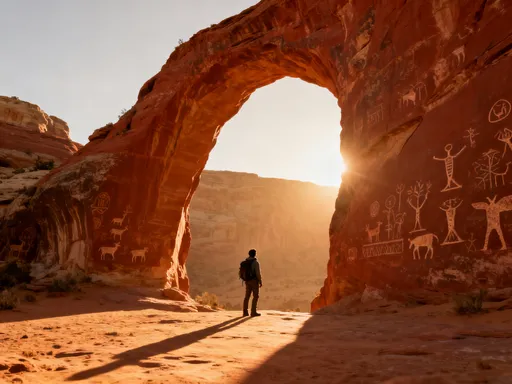
Beneath the awe-inspiring geology of Arches National Park lies a rich and enduring cultural history, one that predates European contact by millennia. Long before photographers captured Delicate Arch at golden hour, Indigenous peoples lived in deep relationship with this rugged terrain. The Ancestral Puebloans, Fremont people, and later the Ute, Paiute, and Navajo nations all traveled, hunted, gathered, and spiritually connected with this land. Their presence is not gone—it is embedded in the rock, in the soil, in the very silence of the canyons. Petroglyphs etched into sandstone cliffs, remnants of ancient granaries tucked into alcoves, and scattered stone tools all testify to a continuous human story woven into the landscape.
While the park’s official narratives have historically emphasized geology, recent efforts have begun to elevate the cultural dimension. Archaeological surveys have identified hundreds of cultural sites within and near the park boundaries, including rock art panels that depict bighorn sheep, human figures, and abstract symbols. These images are not random graffiti—they are records of ceremony, migration, and cosmology. Some researchers believe certain petroglyphs may align with solstice events, suggesting a sophisticated understanding of astronomy. Yet out of respect for cultural sensitivity and site preservation, exact locations are not disclosed to the public, and photography of rock art is strongly discouraged.
The connection between land and identity among Indigenous communities remains profound. For many Native peoples, this region is not a “park” to be visited, but a homeland to be honored. The sandstone fins are seen not as obstacles, but as ancestors; the arches not as photo opportunities, but as portals. Oral traditions passed down through generations speak of creation stories tied to specific formations, of spirits residing in the canyons, and of lessons taught by the endurance of stone. This worldview contrasts sharply with the modern tourist mindset, which often prioritizes visual consumption over spiritual engagement.
Recognizing this, the National Park Service has partnered with Tribal Historic Preservation Officers and cultural advisors to integrate more accurate and respectful interpretations into park materials. Ranger talks now often begin with land acknowledgments, and new signage reflects Indigenous perspectives alongside geological explanations. Still, challenges remain. Centuries of displacement and marginalization have made some Tribal communities cautious about sharing sacred knowledge. The park’s role, then, is not to speak for these voices, but to create space for them to be heard on their own terms. Understanding Arches means learning to see beyond the surface—to recognize that every stone holds memory.
Wandering as a Way of Understanding
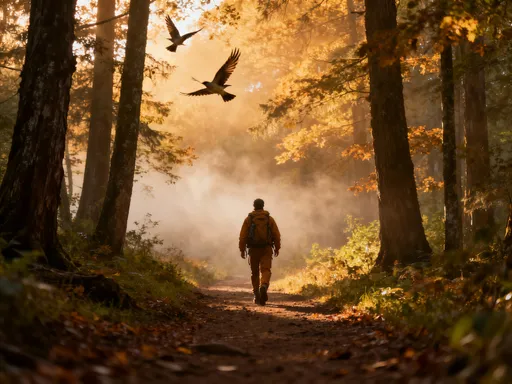
In a world obsessed with efficiency and打卡-style tourism, the simple act of wandering has become radical. At Arches National Park, the slow, meandering journey—pausing to touch a cool rock face, listening to the wind hum through an arch, watching lizards dart across the trail—becomes a form of cultural literacy. Unlike fast-paced sightseeing, which treats landscapes as backdrops for selfies, wandering invites deeper perception. It allows space for curiosity, for noticing the small things: a spiral pattern in the sandstone, a hidden crevice where a juniper tree grows against all odds, the faint outline of a handprint left centuries ago.
Park designers and ecologists have long understood that movement shapes experience. The trail system at Arches is intentionally designed to guide visitors through a progression of revelations. The Windows Section offers accessible views of North and South Window Arches, ideal for families and casual hikers. The Devils Garden Trail, more challenging, rewards effort with a cluster of arches and a sense of solitude. And the Delicate Arch Trail, though crowded, unfolds in stages—first a wide mesa, then a narrow ledge, and finally the breathtaking reveal of the park’s most iconic formation. Each path is choreographed to build anticipation, to slow the mind as much as the body.
But true understanding comes not just from following trails, but from what happens between steps. Ethnographers studying visitor behavior have observed that moments of insight often occur during pauses—when someone stops to tie a shoe, or sits on a rock to drink water. In those still moments, the landscape begins to speak. A park ranger once shared a telling observation: “The people who leave changed are rarely the ones who ran to the arch. They’re the ones who sat quietly afterward, looking.” This idea echoes Indigenous teachings, where knowledge is not acquired through speed, but through patience and presence.
Wandering, then, is not aimless—it is intentional slowness. It is the willingness to get slightly lost, to take a side path that leads nowhere, to let the land guide you. Within designated areas, off-trail exploration is permitted when done responsibly, allowing visitors to experience the desert’s textures up close. But even on marked trails, the mindset matters. When you walk as a participant rather than a spectator, the desert ceases to be scenery. It becomes a conversation. And in that conversation, cultural understanding grows—not through lectures, but through lived experience.
Sacred Spaces in the Open Air
There are no pews, no stained glass, no altars in Arches National Park—yet many who visit describe a sense of sacredness that rivals any cathedral. The park functions as an open-air sanctuary, where natural formations serve as focal points for reflection, gratitude, and connection. Some of these sites appear to have held spiritual significance for ancient peoples. For example, certain rock alignments and petroglyph locations correspond with solar and lunar events, suggesting ceremonial use. While specific interpretations are protected out of respect for living traditions, researchers agree that the landscape was not just lived in, but revered.
One such place is the area around Balanced Rock, where the massive boulder perched atop a narrow pedestal draws the eye skyward. The sight evokes a sense of balance—between earth and sky, permanence and fragility, human scale and geological time. Visitors often stand in silence beneath it, not taking photos, just absorbing. Similarly, the Dark Angel spire, rising starkly against the sky, commands reverence not through size, but through isolation. These places do not require labels to be meaningful; their power is felt intuitively.
Modern park policies recognize the spiritual dimension of these spaces. While the National Park Service does not endorse any religion, it upholds the right of all visitors to engage with the land in personally meaningful ways. This includes silent meditation, quiet prayer, or simply sitting in stillness. At the same time, the park enforces strict rules to protect culturally sensitive areas. Certain canyons and alcoves are closed to the public, not because they lack beauty, but because they contain fragile artifacts or are considered sacred by Tribal nations. These closures are not barriers, but invitations to practice respect.
The balance between access and preservation is delicate. Over 1.8 million people visited Arches in 2023, a number that strains infrastructure and ecosystems. To manage impact, the park has implemented a timed entry reservation system during peak seasons. This not only reduces congestion but allows for a more contemplative experience. When fewer people are present, the silence returns. The stars become visible at night. The land breathes again. In this context, visiting becomes an act of reciprocity—taking only photos, leaving only footprints, and carrying away something far more valuable: a sense of belonging to something larger than oneself.
Voces of the Land: Interpretation and Storytelling
How a story is told shapes how it is understood. For decades, the dominant narrative at Arches National Park centered on geology: how salt beds shifted, how water carved fins, how arches eventually collapse. These explanations are scientifically sound, but incomplete. They risk reducing a living cultural landscape to a natural history exhibit. In recent years, however, a shift has occurred—one that honors both rock and memory. Park rangers now weave Indigenous perspectives into their talks, and interpretive signs increasingly include multiple voices. A sign near the Park Avenue viewpoint might explain not only the formation of the cliffs but also their significance in Ute oral tradition.
The visitor center has become a crucial hub for this evolving storytelling. Exhibits now feature replicas of pottery, tools, and woven baskets, alongside explanations of seasonal migration patterns and traditional plant use. Videos include interviews with Tribal elders, who speak in their own words about the land’s meaning. These changes reflect a broader movement across the National Park System to decolonize interpretation—to move beyond the myth of “pristine wilderness” and acknowledge that humans have shaped, and been shaped by, these places for thousands of years.
Still, gaps remain. Some signage uses cautious language—“believed to be used for ceremonial purposes”—that, while respectful, can feel distant. Visitors seeking deeper understanding may leave wanting more. Yet the progress is undeniable. A decade ago, many parks treated cultural history as an add-on; today, at Arches, it is increasingly seen as central. Ranger-led programs now include discussions on cultural preservation, and school groups are taught that stewardship means honoring both nature and heritage.
The power of storytelling lies in its ability to create empathy. When a visitor hears a ranger describe how a particular spring was a gathering place for generations, or how a rock spiral symbolizes the journey of life, the landscape transforms. It is no longer just red rock—it is memory made visible. These narratives don’t diminish the science; they deepen it. They remind us that to understand a place, we must listen to those who have lived in relationship with it the longest. And in doing so, we become better guests.
Responsible Wandering: Ethics and Preservation
With great beauty comes great responsibility. As visitation to Arches National Park continues to rise, so does the impact on its fragile desert ecosystem. The cryptobiotic soil crust—a living ground cover of algae, fungi, and bacteria—takes decades to form and mere seconds to destroy under a careless footstep. Petroglyphs, already eroded by time, are further damaged by touching. Even well-meaning visitors can unintentionally disrupt nesting birds or trample rare wildflowers. The park’s message is clear: preservation begins with awareness.
Practical ethics guide every responsible visit. Staying on designated trails is not a suggestion—it is essential. These paths are engineered to minimize erosion and protect sensitive areas. Visitors are urged not to climb on arches or rock fins, not only for safety but because repeated contact accelerates weathering. Feeding wildlife is prohibited; even small actions, like leaving crumbs, can alter natural behaviors. And above all, rock art must never be touched—oils from human skin can cause irreversible damage.
Data underscores the urgency. Studies show that trail widening due to off-trail hiking has increased by 15% over the past decade. Erosion rates in high-traffic zones are three times faster than in protected areas. In response, the park has expanded educational outreach, using social media, ranger talks, and on-site signage to promote mindful behavior. The goal is not to restrict enjoyment, but to deepen it—because a preserved park is a more meaningful park.
Responsible wandering also means planning ahead. The timed entry system, in place from April to October, helps distribute visitors more evenly throughout the day. Arriving early or late avoids crowds and reduces stress on infrastructure. Carpooling, using park shuttles, and packing out all trash are simple acts that collectively make a difference. Most importantly, visitors are encouraged to cultivate a mindset of humility. This land does not exist for human entertainment. It is a gift—one that asks only to be treated with care.
Beyond the Postcard: Reimagining National Parks as Cultural Venues
Arches National Park is one of the most photographed places in the American Southwest, its images reproduced on postcards, calendars, and social media feeds. But a photo, no matter how stunning, captures only a fragment of what this place truly is. To reduce Arches to a backdrop is to miss its essence. This is not just a collection of red rocks; it is a living archive of cultural memory, a testament to the enduring relationship between people and place. When we begin to see national parks not only as scenic wonders but as cultural venues, our entire approach to travel transforms.
The shift is already underway. Across the National Park System, there is growing recognition that preservation must include cultural continuity. At Arches, this means honoring the past not by freezing it in time, but by allowing it to inform the present. It means designing experiences that invite listening as much as looking, that value silence as much as sight. It means understanding that a trail is not just a path to an arch, but a journey through time.
For the modern traveler, especially the thoughtful adult seeking meaning beyond the surface, Arches offers a powerful invitation. It asks us to slow down, to wander with intention, to recognize that every landscape carries stories. It challenges us to move beyond filters and hashtags, to engage with places in ways that are respectful, reflective, and reciprocal. And it reminds us that true discovery is not about conquering terrain, but about being changed by it.
So the next time you stand beneath Delicate Arch, bathed in golden light, consider not just how it looks—but what it means. Think of the hands that once traced its curves in prayer, the feet that walked these trails long before roads existed, the voices carried away by the wind but never truly gone. To wander here is to participate in a legacy. And in that participation, we find not only the soul of the desert, but a deeper connection to our own humanity. The arches endure. The question is: will we learn to see them clearly?