How I Slashed My Property Tax Bill Without Breaking a Sweat
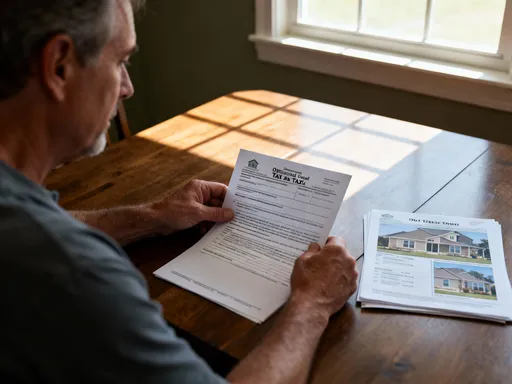
You’re not alone if you’ve ever stared at your property tax bill and thought, There’s no way this is accurate. I’ve been there—shocked, frustrated, and totally confused. But after digging into the system, testing loopholes, and learning what assessors don’t want you to know, I cut my bill by a surprising amount. This isn’t about gaming the system; it’s about working it the smart way. Let me walk you through how to legally keep more of your money. It all started with a simple question: What if my home was overvalued? That one thought led to months of research, a successful appeal, and hundreds of dollars saved every year. The best part? Anyone can do it.
The Shocking Truth Behind Your Property Tax Bill
Property tax bills are not random numbers conjured up by local governments. They are calculated based on a formal assessment of your home’s market value, multiplied by the local tax rate. But here’s what most homeowners don’t realize: that assessed value is not always accurate. In fact, it’s often inflated due to outdated data, incorrect comparisons, or administrative oversights. Assessors typically rely on mass appraisal techniques, meaning they evaluate thousands of homes at once using broad metrics like square footage, number of bedrooms, and recent neighborhood sales. While this method is efficient, it lacks precision. When I first looked closely at my assessment, I discovered that the assessor had used a neighbor’s recently renovated kitchen—complete with granite countertops and stainless steel appliances—as a comparable for my home, which still had its original 1980s cabinetry and appliances. That single misjudgment pushed my valuation hundreds of dollars above fair market value.
The process of determining your home’s value hinges on what are known as “comparables,” or “comps”—homes similar in size, age, condition, and location that have sold recently. These comps are supposed to reflect realistic market conditions, but assessors don’t always visit your home in person. Instead, they may rely on old records, satellite images, or even assumptions about upgrades. This means that if your house hasn’t been modernized, but nearby homes have, you could be penalized by association. Another common error involves lot size. I once found that my property was listed as 0.3 acres when, according to the county survey, it was actually 0.25. That small discrepancy added unnecessary value to my assessment. Structural issues such as foundation cracks, roof damage, or outdated plumbing can also go unaccounted for in official records, further skewing the valuation upward.
Understanding how assessments work is the first step toward challenging them. You have the right to review your property record, known as the “assessment roll,” which includes details like square footage, land value, and recent improvements. Many counties make these records available online, allowing you to verify the accuracy of the information. If you find inconsistencies—such as a bedroom count that’s too high or an upgrade you never made—you now have grounds to question the final number. Remember, the goal isn’t to argue against taxation itself; it’s to ensure fairness. When your neighbors with renovated homes are used to justify a higher value for your unrenovated one, the system fails its purpose. By becoming informed, you shift from being a passive recipient of a tax bill to an active participant in a process designed to be transparent and equitable.
Why Overpayment Is the Norm (And How to Stop It)
Overpaying on property taxes isn’t rare—it’s routine. Most homeowners accept their tax bill without scrutiny, assuming it must be correct because it comes from an official source. But this trust is often misplaced. Local governments operate under tight budgets and rely heavily on property tax revenue. To ensure steady income, they depend on the fact that most people won’t question their assessments. There’s no incentive for the assessor’s office to lower your bill unless you push for it. The system is built on inertia: if you don’t file an appeal, the valuation stands. And because assessments are often updated in cycles—sometimes only every three to five years—errors can persist for years without correction.
I used to be one of those passive payers. For years, I paid my tax bill on time, never thinking to compare it to similar homes in my neighborhood. Then I attended a local community meeting where a neighbor shared how she’d reduced her tax burden by nearly 15% after discovering her home had been overvalued. That conversation sparked my curiosity. I began looking at recent sale prices of homes like mine—same floor plan, same block, similar condition. What I found was startling: several comparable homes had sold for significantly less than my assessed value. One, just two doors down, had sold for $35,000 less despite being nearly identical. That discrepancy suggested my assessment wasn’t grounded in reality.
The shift from overpayer to informed taxpayer didn’t require legal expertise or financial training. It required only awareness and action. The truth is, challenging your property tax assessment is not an act of defiance—it’s a legitimate use of a system designed to allow appeals. Every jurisdiction has a formal process for disputing valuations, and it exists for a reason: to correct errors and ensure fairness. When you file an appeal, you’re not asking for special treatment; you’re asking for accuracy. The burden of proof isn’t on you to prove the assessor wrong beyond doubt, but to show that the current valuation doesn’t reflect market conditions. And in many cases, simply presenting recent comparable sales is enough to prompt a reassessment. The key is realizing that silence equals acceptance. If you don’t speak up, the status quo remains, and you keep paying more than you should.
The Appeal Process Demystified: What They Don’t Tell You
Filing a property tax appeal sounds intimidating, especially if you’ve never dealt with government procedures before. But in most cases, the process is straightforward and accessible to anyone willing to put in a few hours of research. The first step is to obtain a copy of your property’s assessment record, which outlines how the value was determined. This document will list the comps used, the square footage, lot size, and any noted improvements. Review it carefully. If something seems off—a bedroom count that doesn’t match your home, or a renovation you never did—you’ve already identified a potential argument.
Next, gather evidence. The strongest tool in any appeal is recent sale data from comparable homes. These should be as similar as possible in size, age, condition, and location. Sales within the past six to twelve months carry the most weight. I pulled public records from the county clerk’s office and cross-referenced them with online real estate platforms to find three solid comps that had sold below my assessed value. I also took photos of my home’s interior and exterior, highlighting outdated features like worn carpet, an old HVAC system, and a roof that was nearing the end of its lifespan. These visual aids helped paint a picture of a home that hadn’t kept pace with the market.
Once your documentation is ready, submit a formal appeal to your local assessor’s office or board of review. Deadlines vary by location, but they’re usually strict—miss them, and you’ll have to wait another year. The form itself is typically simple, asking for basic property information and the reason for your appeal. In my case, I cited “overvaluation based on inaccurate comparables and physical condition.” Some jurisdictions require a brief statement; others allow you to attach supporting documents directly. After submission, you may be invited to a hearing, which is often informal and held in a small office or conference room. Don’t be intimidated. The hearing officer isn’t there to argue with you—they’re there to review the facts. Present your evidence calmly, stick to the data, and avoid emotional appeals. I walked in with a folder of comps and photos, answered a few questions, and left within 20 minutes. A few weeks later, I received a revised assessment that lowered my taxable value by 8%, saving me over $400 annually.
Timing Is Everything: When to Act for Maximum Impact
One of the most common reasons appeals fail isn’t the strength of the case—it’s poor timing. Assessment cycles and appeal deadlines vary by county and state, but they follow a predictable pattern. Most jurisdictions send out assessment notices in the spring, followed by a window—usually 30 to 60 days—during which homeowners can file an appeal. If you miss that window, you’re locked in for another year. I learned this the hard way. The first time I considered appealing, I waited too long, thinking I could do it when I had more time. By the time I gathered my documents, the deadline had passed by two weeks. That delay cost me nearly $500 in avoidable taxes over the next 12 months.
Now, I treat the arrival of my assessment notice like a financial alarm clock. As soon as it arrives, I set a reminder for the appeal deadline and block off time to review my records. Acting early gives you room to correct mistakes, request additional documents, or even schedule a pre-appeal meeting with an assessor. Some counties offer informal review sessions where you can discuss your concerns before filing a formal appeal. These meetings can resolve issues quickly and without paperwork. I once attended one and left with a corrected square footage listing—no hearing required. Even if you don’t get an immediate adjustment, the conversation helps you understand what kind of evidence will be persuasive.
Another benefit of early action is the ability to track market trends. Property values fluctuate, and a downturn in your neighborhood can strengthen your case. If homes are selling for less than they were a year ago, that’s a clear signal that assessments may need to be adjusted. By staying ahead of the cycle, you can use the most current data to support your appeal. Waiting until the last minute means relying on older information, which may not reflect today’s market. The bottom line is this: delay is the enemy of savings. The moment your notice arrives, start preparing. Mark your calendar, gather your evidence, and submit your appeal on time. A few hours of effort now can save you hundreds—or even thousands—over the next few years.
Leveraging Exemptions and Deductions You Didn’t Know Existed
Even if your assessment is accurate, you may still be paying more than necessary. Many homeowners overlook valuable exemptions and deductions that can reduce their taxable value. These programs vary by location but commonly include homestead exemptions for primary residences, senior citizen discounts, veteran benefits, and incentives for energy-efficient upgrades. The catch? They’re not always applied automatically. You have to request them. I discovered this when I reviewed my tax record and noticed that no homestead exemption was listed, despite having lived in my home for over a decade. A quick call to the county assessor’s office revealed that I needed to file an application and provide proof of residency. I submitted the form, attached a copy of my driver’s license and utility bill, and within a month, my taxable value dropped by 5%. That small change saved me $275 per year—money I hadn’t even known I was leaving behind.
Homestead exemptions are among the most widely available and impactful. In many states, they shield a portion of your home’s value from taxation—sometimes up to $50,000. For a home valued at $300,000, that could mean thousands of dollars in assessed value removed from the tax base. Senior citizens and disabled homeowners may qualify for additional freezes or reductions, especially in states with high cost-of-living pressures. Veterans, particularly those with service-related disabilities, can access special exemptions in numerous jurisdictions. I know a widow who reduced her tax bill by over 30% simply by applying for a surviving spouse veteran benefit she hadn’t known existed.
Energy-efficient upgrades are another overlooked area. Some local governments offer abatements or credits for installing solar panels, energy-efficient windows, or high-efficiency heating systems. These aren’t just good for the environment—they can directly lower your tax burden. The key is knowing what’s available in your area. A quick search on your county’s official website or a call to the assessor’s office can uncover programs you’ve never heard of. Don’t assume you don’t qualify. Apply, provide documentation, and let the authorities decide. At worst, you’ll learn something new. At best, you’ll start saving money with minimal effort. These exemptions exist to support taxpayers, not to hide from them. By taking the time to investigate, you’re not gaming the system—you’re using it as intended.
When to Bring in the Pros (And When to Go Solo)
There’s no rule that says you have to go it alone. In some cases, hiring a professional can increase your chances of success—especially if your property is complex, unique, or significantly overvalued. Real estate appraisers, tax consultants, and even attorneys with property tax experience can provide expert analysis and represent you in hearings. But here’s the reality: for most single-family homeowners, professional help isn’t necessary. The cost of hiring someone—often hundreds of dollars—can eat into your savings, especially if the discrepancy is relatively small. I tested both approaches. The first time I appealed, I went solo with a strong set of comps and condition photos. I won a reduction of $420 per year with no outside help. The second time, I dealt with a commercial property that had zoning complications and multiple valuation methods. In that case, I hired a licensed appraiser for $600. The appeal saved me $1,800 annually, making the investment worthwhile.
The decision to go professional should be based on cost-benefit analysis. Ask yourself: Is the potential savings significantly higher than the fee? Does the property have unique features that standard assessments might undervalue? Is the appeal process in your area particularly complex or adversarial? If the answer is yes, then expert help may be justified. But for the average homeowner, the process is manageable. Most appeals rely on basic market data and condition assessments—things you can gather yourself. Professionals can be helpful in presenting arguments or navigating legal nuances, but they don’t have access to secret information. Everything they use—sales records, property details, market trends—is available to you.
That said, there’s value in learning from experts. Even if you don’t hire one, you can consult a real estate agent for recent comps or ask a contractor to document structural issues. These small collaborations can strengthen your case without incurring high fees. The goal isn’t to become a tax lawyer—it’s to be informed, prepared, and persistent. Start with a simple appeal on your own. Use it as a learning experience. If you succeed, great. If not, then consider whether professional assistance makes sense for a second attempt. Knowledge builds confidence, and confidence leads to better outcomes. Over time, you’ll develop a clear sense of when to act independently and when to seek support.
Building a Long-Term Strategy: Stay Ahead, Not Behind
Winning one appeal isn’t the end—it’s the beginning of a smarter financial habit. Property values change, assessments get updated, and new errors can emerge. If you only act when you receive a shockingly high bill, you’re always playing catch-up. A better approach is to make tax review part of your annual financial routine, just like checking your credit report or reviewing insurance coverage. I now set a calendar reminder every spring to pull my assessment record, compare it to recent sales, and verify key details like square footage and lot size. I keep a digital folder with photos, repair records, and market data—everything I might need for a future appeal.
This proactive mindset has paid off. Two years after my first successful appeal, the assessor’s office revalued my neighborhood based on a surge in sales. My home was suddenly assessed $8,000 higher. But because I was monitoring the situation, I caught it early. I gathered new comps showing that prices had actually stabilized, not increased, and filed another appeal. The adjustment was approved, and my tax increase was reversed. Without my annual review, I would have paid hundreds more without even knowing why.
Over time, these small corrections compound. Saving $400 one year, $300 the next, and avoiding unnecessary hikes adds up to real money—thousands over a decade. That’s cash that stays in your pocket, available for home repairs, family needs, or retirement savings. More importantly, the process empowers you. You stop feeling like a victim of the system and start seeing yourself as a participant in it. You learn how local government works, how values are determined, and how to advocate for fairness. That knowledge is invaluable. Property taxes are a fact of homeownership, but overpayment doesn’t have to be. With a little effort, the right information, and a commitment to staying informed, you can keep more of your hard-earned money—legally, ethically, and without breaking a sweat.